You did not bring me in for this. You brought me in for the AI conversation, the real one, with the diagrams. You were ready for MCP servers and small language models and agents handing work off to other agents in some clever loop, and somewhere in the back of your mind you were bracing for the invoice that comes with all of it. So when I tell you that the single most valuable thing you can do this year is clean up your SharePoint, the room goes quiet. People glance at each other. I can read the thought on every face. This is what we are paying him for.
Yes. This is exactly what you are paying me for. I can walk you through the diagrams another day, and I can do it in my sleep. They are not the answer. This is.
And I am telling you this from doing the work, not from reading about it. When I point one of these assistants at a company's document library, the real thing, with the actual contracts and policies and proposals in it, it answers questions in seconds that used to cost an afternoon of digging and three emails to whoever has been here long enough to remember. Not a summary of the internet. Their documents. Their language. And the thing doing the reading runs about twenty dollars a month.
That is the part people have not absorbed yet. The connector that lets the model read across your SharePoint sits on the cheap plan, the same one an individual pays for. The intelligence is no longer the expensive, scarce, hard-to-get ingredient. It is rented, it is cheap, and it does the heavy lifting for you. Ask it a contract question and it finds the clause. Hand it a draft RFP and it answers from your own past wins. Point it at a vendor agreement and it gives you a first-pass read on the risk. It is genuinely mind-bending the first time you watch it work.
But the magic is borrowed, and it gets better the more order there is underneath it. That is the whole point, and it is the part nobody wants to hear, because it is not exciting and it is not new.
Now, before you start bracing for hallucinations and pristine folder structures, let me tell you what this thing is not. It is not a dumb model stapled on top of your files, grabbing whatever sits closest and reading it back to you. That version would be junk, and you would be right to ignore it. What actually happens is closer to handing a sharp, fast analyst the keys to your library. It decides what to go looking for, it reads the real documents, their titles, their dates, the way they are written, and it reasons about what it is holding before it answers. I have watched it pull the current contract out of a library nobody would call tidy and leave the retired one sitting there untouched. It is good at this. Good enough that you do not need a perfect library to get real value out of it.
So this is not a plea for perfection, and it is not a reason to feel anxious. The tool absorbs ordinary mess on its own. What it cannot do is read your mind about the things that are genuinely ambiguous, the two documents that flatly contradict each other with nothing to say which one won. That is the narrow band where your discipline earns its keep. Not pristine. Just managed. A short list of habits, and none of them are hard.
One source of truth per thing. One current contract template, one current policy, not five near-identical copies with no way to tell which one won. Duplicates are where the model gets confused and starts blending answers that should never have touched.
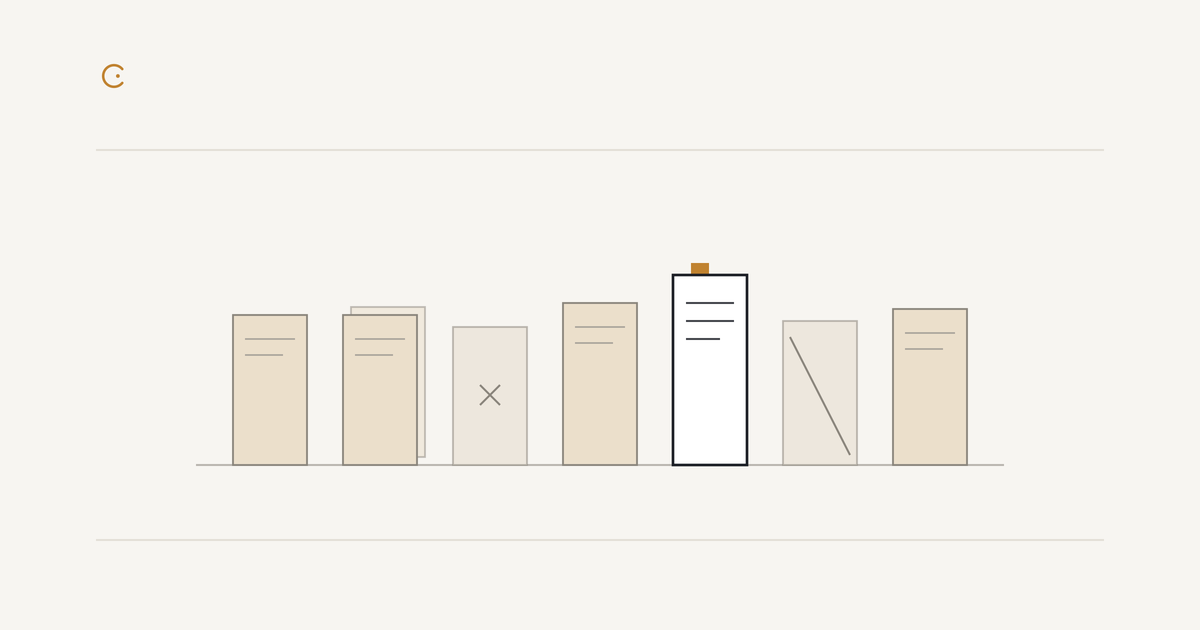
Retire the dead, and retire it out of sight. A document that has been superseded but still sits in the live library is worse than a missing one, because the model will quote it with total confidence. Move it somewhere the assistant does not look.
Current beats complete. The library does not need everything you have ever written. It needs what is true today. Throwing things out is a feature, not a loss.
Make the status legible. A date, a draft or a final, an active or a retired, right in the title or the file, so a person and a machine can both tell what they are holding.
Give it an owner and a rhythm. Hygiene is a standing job, not a thing you do once a year when someone finally complains. Somebody owns it, and a new document retires the old one on its way in.
And the most important one. When two documents disagree, a human decides which one is right. The model cannot do that. It cannot tell truth from a confident fake. Somebody has to make the call, and that somebody is you.
Here is the one place it can still bite you, smart as it is. When two documents flatly contradict each other and nothing signals which one is current, even a sharp reader has to choose, and it can choose wrong. On a meeting summary, that is a shrug. On a contract clause, a risk threshold, or a number in a bid, a confident wrong answer is a liability with your name near it. That is the exact ambiguity those habits are built to remove. You are not scrubbing the whole house. You are taking the loaded gun off the table.